The Pause That Almost Ruined All
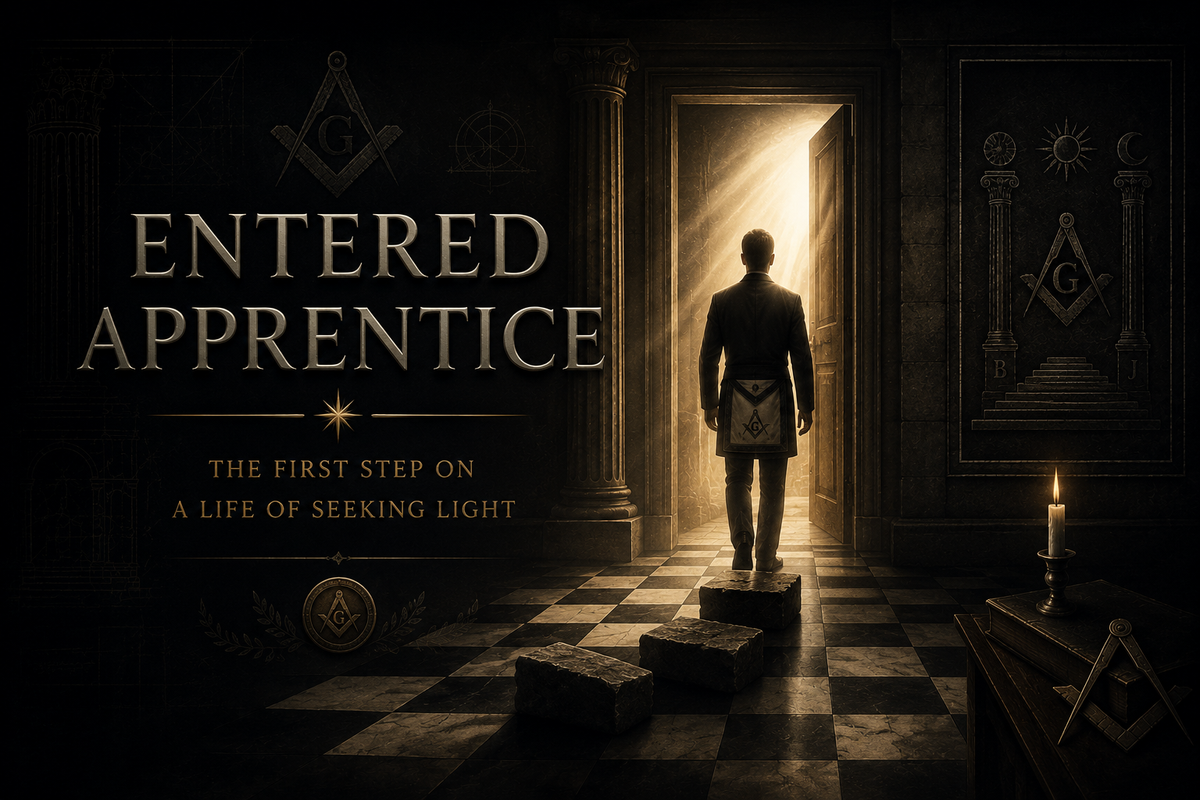
There’s no way to fully prepare for your first degree. You can read about it, ask around, hear other men speak in vague, reverent terms about “the experience” — but none of that tells you what it actually feels like to be the one standing there, in the moment, with everyone else in the room already knowing what happens next and you having no idea, blindfolded and alone.
That evening started off kind of rough anyway. For starters, I was late to my own initiation dinner. You see, the lodge always met at 6:30 PM, a full hour before lodge, to enjoy a meal together. I hadn’t forgotten this crucial detail…but my invitation hadn’t specified that I was actually invited to the dinner, so I didn’t prepare to show up. Imagine my surprise when I received a call from the Secretary about 30-minutes before the degree, a little perturbed that they had waited to eat with me and I hadn’t shown up.
After some stammered apologies and a little throttle therapy, I made it to the Lodge safely.
Everything else about the evening moved with the kind of quiet formality I had expected, but also with a sense of heaviness — a sense that the men in the room had done this many times before and knew exactly how it was supposed to go. I didn’t. I was the only person in that lodge who was experiencing all of it for the first time…and it showed, at least to me.
For the most part, though, it went the way I’d been told it would…and had read, months before the initiation. You see, all the Masonic rituals, at least the gist of them, is available online or in print. That’s one of the reasons this blog is not an expose. Besides the fact that I keep my word…and I did swear not to reveal any of the “secrets” of the Lodge, meaning the methods by which a Mason can identify another Mason…it’s been done before. This blog is more about what the degrees make you feel…and the results of experiencing them.
Step by step, the ceremony carried me forward the way it’s carried every Entered Apprentice before me, plunging me headlong into the world of moral lessons.
Then came a question I hadn’t braced myself for: In whom do you put your trust?
I knew, somewhere in the back of my mind, that I’d come across the answer before — in the reading and preparation I’d done leading up to that night. But in that moment, with the weight of the room on me, it didn’t come easily. There was a pause. An honest, awkward, hanging pause, long enough that I could feel it…and long enough for the Worshipful Master to rephrase the question in an attempt to get me to “get” it.
I wasn’t stalling. I was searching — genuinely reaching for the answer instead of reciting something I’d memorized without meaning to. And when it finally surfaced, it came out less like a confident declaration and more like a stammer:
“In God.”
It wasn’t smooth. It wasn’t polished. But it was true, at the time, and I think that matters more.
Looking back, I’ve made a kind of peace with that stumble. Freemasonry doesn’t ask a man to be perfect walking through the door — it asks him to be honest. My pause wasn’t a failure of preparation so much as proof that the question actually landed as intended. I wasn’t performing an answer I’d rehearsed long before. I was locating something true inside myself, in real time, in front of witnesses.
That’s a strange kind of gift, in hindsight. Most of the important questions in life don’t come with cue cards. You either know the answer when it counts, or you find out you don’t the hard way. That night, I found out I did know the answer at the time— even if it took me a beat longer than I would have liked to say it out loud.
Without wandering too far into detail that belongs inside the lodge and not on a blog, I can say that the degree is built around a journey — one that moves a man, deliberately and symbolically, from darkness toward light. That’s not just staging and it’s not pretty words. It’s quite literal and it’s the whole point. You’re meant to feel the absence of something before it’s given to you, so that when it arrives, it actually registers. For that reason, every candidate enters the Lodge blindfolded, dressed similar to a medieval heretic being led to the gallows, before leaving the Lodge room a newly made Mason.
Along the way, the working tools of an Entered Apprentice are presented, each one carrying a meaning well beyond its use in a historical stonemason’s hand. A gauge for measuring time and dividing the day into labor, rest, and service to others. A gavel for knocking away the rough edges of a man’s character — the parts of yourself that need shaping before you’re fit for something larger. Simple tools and simple lessons, but the kind of simple that sticks with you, because you’re not just told what they mean — you’re made to sit with the idea before it’s all explained.
There’s also the lambskin apron, given early and worn as a badge of a Mason— a symbol of innocence and honest labor, and, as it was explained to me, more honorable than any decoration a man might otherwise bear. I remember thinking it was a strange thing to be handed something so plain and to be told it meant so much. I understand it a little better now, though many of my brothers will think I have abandoned it by my actions and beliefs.
Underneath all of this degree runs a thread about self-improvement — the idea that a man joins not because he’s finished becoming who he’s meant to be, but because he most certainly isn’t, and the work of getting there is better to be done deliberately, and alongside other men doing the same work.
That idea landed harder than I expected. I went in curious. I came out with homework, as every degree comes with a sort of catechism that the candidate is expected to memorize and be able to recite, mouth to ear, as all Masons have done before since time immemorial.
I left that evening an Entered Apprentice, still turning that pause over in my mind. It’s stayed with me since, longer than almost anything else from that night.
Maybe that’s the point.